Rukh works at three connected levels: the child, the family and the neighbourhood. Education remains the anchor, while nutrition, wellbeing, livelihoods, climate action and partnerships remove the barriers that prevent education from becoming lasting mobility.
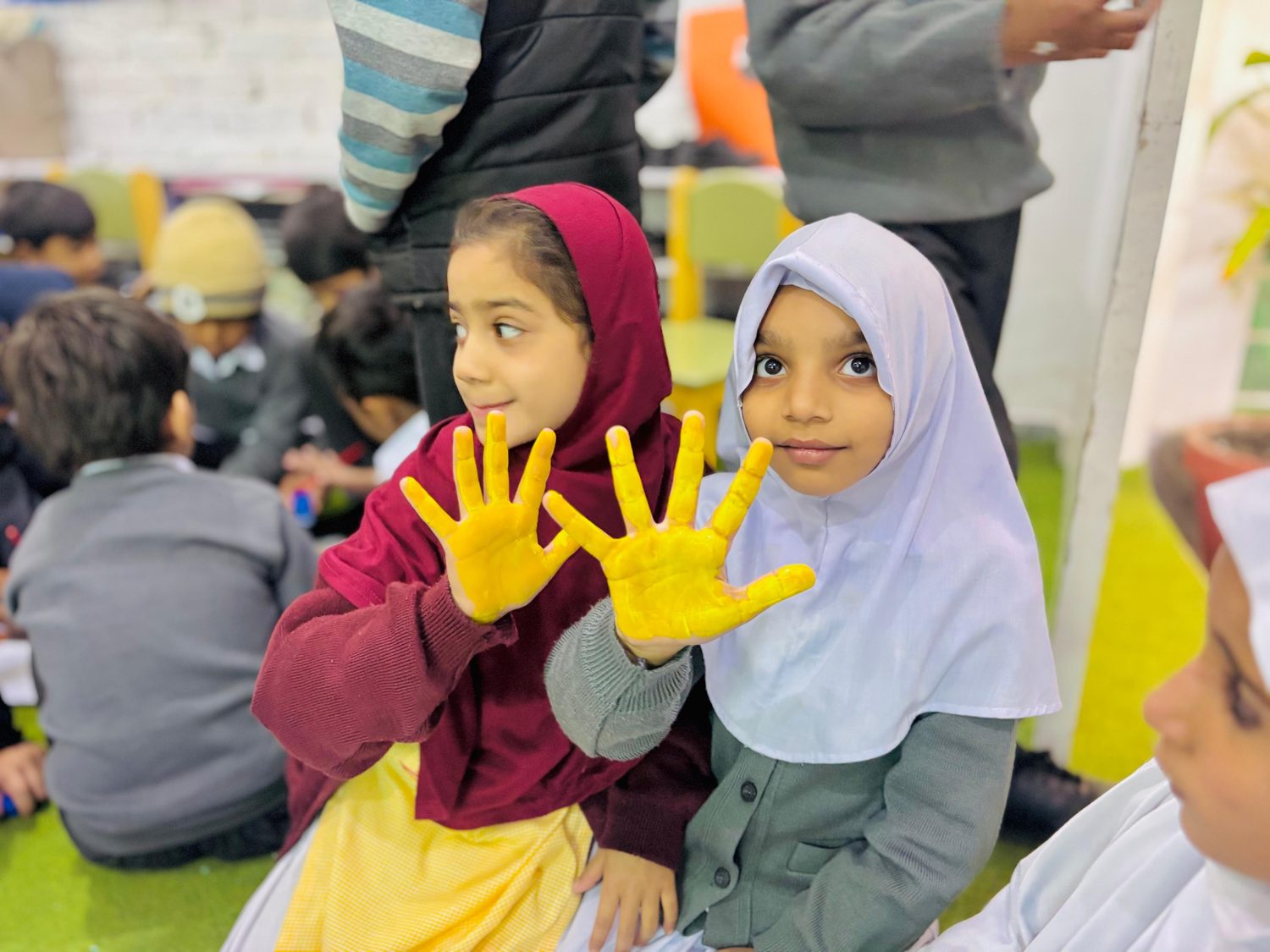
Rukh supports children from foundational education through higher education, employment and community leadership. Alongside formal schooling, students gain exposure to science, technology and the skills shaping the future.
“Every child here has a name, a story, and a teacher who knows both.”
Rukh Foundation School
Provides accessible, high-quality education for children from underserved families, supported by meals, wellness monitoring and close engagement with their households. The school is the centre of Rukh's long-term pathway from early learning to higher education and employment.
STEM, AI & Robotics
Introduces students to science, technology, engineering, mathematics, artificial intelligence and robotics through practical, project-based learning. The programme builds digital confidence, problem-solving and exposure to future education and employment opportunities.
Higher Education & Career Pathways
Supports students beyond school through college placement, scholarships, university guidance, internships, mentoring and career preparation. The programme helps ensure that completing school becomes the beginning of economic mobility, not the end of Rukh's support.
2. Health, Nutrition & Wellbeing
Health, Nutrition & Wellbeing
Rukh addresses the physical, emotional and household conditions that affect a child's ability to learn. Its programmes respond to hunger, illness, sleep deprivation, emotional distress and unsafe home environments.
“A healthy child is a child who can still dream about tomorrow.”
Daily Community Meal Programme
Led by Rukhsana Izhar, the programme prepares and distributes more than 1,000 fresh, home-cooked meals each day. It addresses immediate food insecurity while ensuring that every person is served with the same care and dignity given to family.
Student Wellness Programme
Tracks each student's daily wellbeing across four dimensions to identify concerns such as food deprivation, lack of sleep, emotional distress and domestic abuse. Daily monitoring helps the school recognise warning signs early and coordinate appropriate support before problems become absence, academic decline or dropout.
Community Health & Family Support
Provides preventive health awareness, screenings, referrals and targeted medical assistance for students and their families. The programme connects school-based wellness monitoring with the wider health and stability of each household.
3. Livelihoods & Economic Empowerment
Livelihoods & Economic Empowerment
Rukh helps families strengthen their income so children are not pushed out of education by financial pressure. The approach combines finance, skills, enterprise support, productive opportunities and access to markets.
“When a mother earns with dignity, a whole household breathes easier.”
Strategic Microfinance
Provides carefully selected financial support where a small investment can establish or strengthen a sustainable family livelihood. Support may include working capital, tools, equipment or other productive assets, based on Rukh's understanding of the household.
Livelihoods & Enterprise Development
Supports women and families with practical business guidance, skills, mentoring and income-generating opportunities. The programme helps participants move from short-term assistance toward sustainable economic independence.
Khudari Bazar
Provides a dignified marketplace where women, families, students and community makers can present and sell what they produce. It connects livelihood support with real customers, market exposure and earned income — helping people earn rather than remain dependent on assistance.
4. Climate Action & Sustainable Communities
Climate Action & Sustainable Communities
Rukh responds to climate and environmental challenges through neighbourhood projects, circular construction and climate-responsive design. The work explores how discarded materials, traditional techniques and local knowledge can create more sustainable homes and shared spaces.
“What the city throws away, our neighbourhood turns into a place to belong.”
Neighbourhood Regeneration & Circular Placemaking
Transforms neglected areas by collecting discarded materials and repurposing them into useful places for learning, sitting and community interaction. Rukh's first intervention used reclaimed concrete waste to create a study and gathering space around existing trees.
Sustainable Built Environment & Circular Construction
Develops and demonstrates low-carbon, climate-responsive construction using mud, reclaimed concrete and other locally available or discarded materials. The programme explores sustainable floors, exterior finishes, building elements and products for affordable eco-housing and community spaces.
Climate Education & Community Resilience
Helps students and community members understand climate change, heat, waste, water and the environmental impact of construction. Learning is connected to practical action through planting, building, material recovery and neighbourhood improvement.
5. Community Engagement & Partnerships
Community Engagement & Partnerships
Rukh connects students and families with volunteers, professionals, creatives, researchers, founders and institutions. These relationships bring knowledge, networks, resources and practical learning opportunities into the community.
“The people who show up for our children are as much a part of Rukh as we are.”
Changemaker Residency
Provides safe, welcoming short-term accommodation and workspace for mission-driven women founders, researchers, fellows and visiting partners. Residents can develop their work while engaging directly with Rukh's students, team and surrounding community.
Creative & Community Workshop
Provides a practical space where artists, craftspeople, designers, builders, activists and professionals can conduct hands-on learning activities. The workshop connects children with real-world skills, making, experimentation and community problem-solving.